

Four Films, One Hit Series: Zendaya’s Massive 2026 Slate
With four films, a long-awaited TV return, and a level of visibility rarely granted to young Black actresses, Zendaya is heading into a milestone year that feels both historic and well-earned.

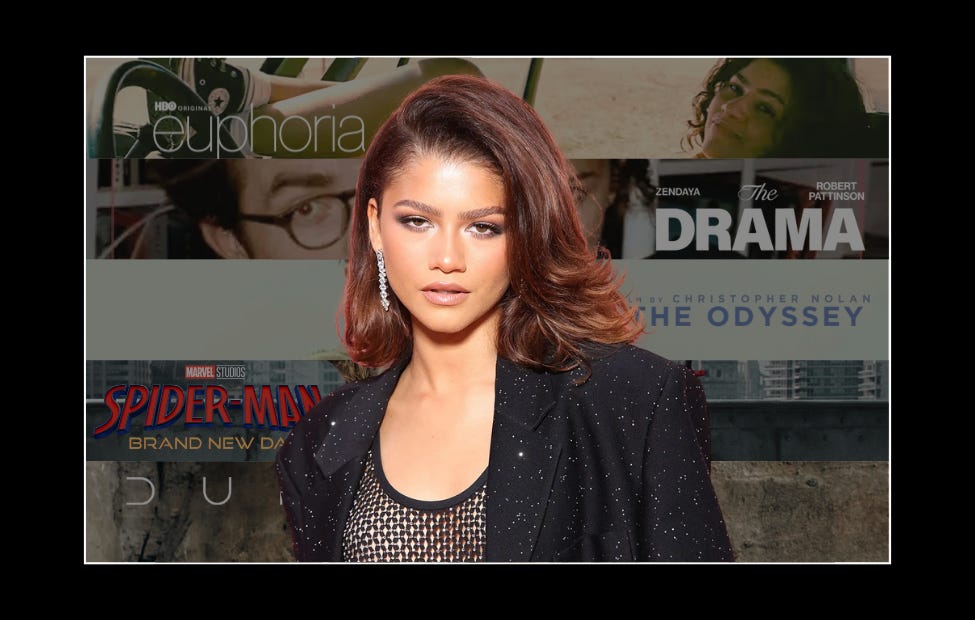
Zendaya has always moved through Hollywood with a kind of quiet certainty — never rushing, never forcing, just steadily rising. Now, in her late 20s, she’s standing at the edge of what may be the most defining year of her career. The kind of year actors dream about. The kind of year that doesn’t happen often. And for a young Black woman in this industry, it’s the kind of year that has been denied far too many times.
But Zendaya is changing that narrative.
She’s entering 2026 with four major films — all wildly different from one another — and the highly anticipated return of Euphoria, the role that proved she could carry the emotional weight of an entire generation. It’s a slate that feels less like coincidence and more like culmination: the result of thoughtful choices, careful growth, and a willingness to stretch herself in every direction.
Her path here wasn’t rushed. Zendaya’s big screen film career began in earnest in 2017 with Spider-Man: Homecoming and The Greatest Showman, introducing her to global audiences while allowing her the space to grow. With each project since, she’s shown more range — from the aching vulnerability of Malcolm & Marie to the tension-filled athleticism of Challengers. She found a rhythm that blended commercial success with intimate, character-driven work, creating a lane uniquely her own.
Now all of that groundwork is paying off.
Next April, she leads The Drama, an A24 romantic drama alongside Robert Pattinson — the kind of emotional, grounded storytelling that lets her tap into her more subtle, human side. Just months later, she shifts gears into Christopher Nolan’s The Odyssey, playing Athena in a sweeping epic that demands scale, intensity, and mythic presence. Then she jumps directly into her familiar MCU universe with Spider-Man: Brand New Day, returning as MJ in a role that continues to showcase her effortless on-screen charm. And closing the year, she plunges back into one of sci-fi’s biggest franchises with Dune: Part Three, sealing a year that spans nearly every kind of film a star can make.
And woven between all of this? Euphoria — finally returning after years of delays. Rue Bennett is the role that cracked her open in the eyes of critics and audiences alike. It’s the performance that earned her Emmys and established her as one of the most emotionally intuitive actors of her generation. The idea that she’ll revisit Rue in the same year she releases four films is remarkable — and honestly, a little thrilling.

But beyond the sheer quantity of work, there’s something deeper happening here. Zendaya’s 2026 is the kind of year Hollywood has historically reserved for a very specific type of star — usually male, usually white, usually already decades into their career. For Zendaya to take up this much space, across this many genres, in a single calendar year, matters. Not just because she’s doing it — but because she’s doing it well, with intention, range, and a level of versatility that makes the industry’s old excuses for limiting Black actresses feel even more outdated.
She’s not “rising.” She’s arrived. And 2026 is where the world will truly see the full spectrum of what she can do.
If everything lands as expected, Zendaya won’t just dominate the year — she’ll show us a year not of opportunity given, but opportunity earned. A year that feels like a celebration of everything she’s been quietly building.
A year that may be remembered as the moment she became one of Hollywood’s defining leading actors — not someday, but now.
— REAVES // @wildreaves