

Jean Elie On 'Wonder Man,' Haitian American Representation, And Bringing Terrell To Life
INTERVIEW

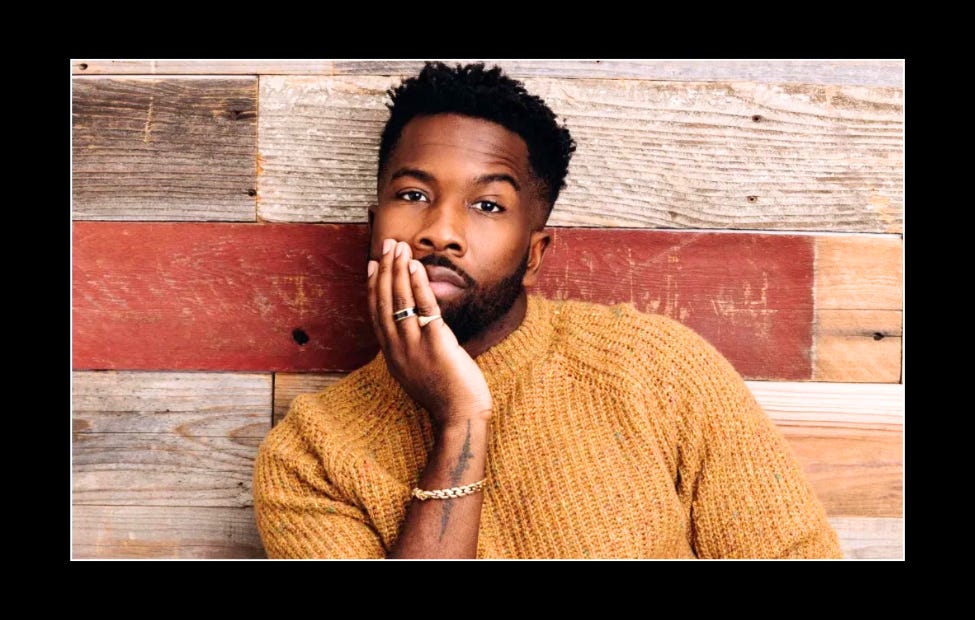
Marvel’s new Wonder Man series premiered with an explosive fusion of the studio’s signature action, superhero spectacle, and Haitian American cultural identity and heritage. At the heart of this representation is acclaimed actor Jean Elie, who served as both a cultural consultant on the series and stars as Terrell, an ambitious production assistant working on the set of a Wonder Man remake. Elie’s performance captures the determination, quick wit—and surprise visits—that define Terrell’s hustle behind the scenes of a massive Hollywood production like Wonder Man.
I spoke with Jean Elie for TheBlkScript about his experience on the series, maintaining his humanity while navigating personal and professional pressures, balancing dual creative roles, and what it means to authentically represent Haitian American culture in a Marvel project. Read about it here:
From shaping Haitian culture on screen to navigating life behind the scenes, Elie opens up about what this moment means—on set and beyond.
Dominique Young: What was your initial reaction when you were tapped to serve as a cultural consultant on this project?
Jean Elie: My initial reaction was, “Who’s calling me?” I was on the set of Rap Sh!t filming Season 2 when I got the call. I was like, they’re making a Haitian character? Is this Brother Voodoo? [laughs] What’s going on here? I’m like, why didn’t I get a call for this? Then I realized, oh—you guys made a choice to change the character from a white character to representing Haitian culture. I was like, oh, this is really cool.
The fact that they were calling a cultural consultant meant they were taking it seriously. They didn’t want it to just be optics—they wanted it to feel authentic and real. That felt really cool, and it felt like one step closer to playing my own Marvel character one day. But the first task was to make sure we got this right.
DY: Did your cultural expertise lead to any revisions or refinements to the script?
JE: Yeah, I did change some things up. They sent me the scripts—specifically episode 3 “Pacoima”—because that’s where the Haitian influence is most heavily represented. They asked, does this ring true? Does this feel real? Do these characters feel real?
I noted up the script to reflect the dynamics you see in that episode. I gave them ideas about how Haitian parents see their kids, the dynamic between the cousins and them speaking Creole, and how Simon is first generation but kind of hides his culture.
When it came to set design, we talked about how the home should look—what artwork would be there, what would be in the kitchen. I remember when they first showed me the kitchen, it was super pristine and set up properly and I was like, yeah, this is a family that acclimated to Westernized culture, but you also have to understand that adult Haitians are somewhat hoarders—they don’t get rid of things they bought. [laughs] What they buy is important to them because they’re used to not having much. So when they have things, they keep them. Those are the kinds of details I worked through with the set designers.
I also worked with the actors on dialect—making sure it didn’t feel like they were mimicking the sounds of the language, but actually speaking it in a way that felt authentic. We worked on context and rhythm. They listened to recordings of Haitian Creole spoken by Haitian people so they could really listen to it and feel it, and bring the right texture to the language.
DY: As a proud Haitian American man, father, and advocate for diversity and authentic representation, what did it mean to you to see Simon Williams’ (Yahya Abdul-Mateen II) family life portrayed on screen—especially young Simon’s (Kameron J. Meadows) relationship with his dad (Béchir Sylvain)?
JE: It meant a lot because young Simon looked up to his father—and your father is your first hero. He’s your first example of so many things. Seeing the way his dad moved, looked out for him, and had real conversations with him about life—it was really cool.
The fact that Simon was Haitian told me that the things we think about as Haitian Americans are possible to achieve. Simon is trying to succeed in his career, but he still feels outcast within his family sometimes because he’s doing something so far outside what they deem possible for themselves. As a Haitian American, you’re often told growing up that you need to be a doctor, lawyer, engineer—that’s the cliché for a lot of Caribbean households. But seeing him go after something completely different and stand on business when talking to his family about it—that was brave.
For me, when I decided to pursue this career as an entertainer, I didn’t tell my family. I just went off and did it, and they found out later. They knew I was moving to California, but they didn’t really understand what was happening. I didn’t want to over-explain and have people poke holes in my plans.
So it’s inspiring to see someone like Simon Williams on screen—especially for Haitian Americans and anyone in entertainment. Simon gets it. And you can share Wonder Man with your family, and they’ll get it too.
DY: I’d love to revisit Episode 3, “Pacoima,” particularly the home scene at Mrs. Martha Williams’ (Shola Adewusi) birthday party. The details of the house—from the American flag posted out front, to the Haitian décor and food inside, to the blend of English and Haitian Creole—were captured so beautifully and felt incredibly intentional. Could you speak about your involvement in shaping this scene, and how it helped amplify Haitian American culture in the series?
JE: Yeah, first off, Brian Gay and Andrew Guest were very serious about elevating the culture and the representation of what it means to be Haitian American in America. Because they were so serious about it, they passed that information along to all the department heads to really make it work. They took notes, with no pushback outside of things that couldn’t happen because of deadlines and resources.
I worked with all the department heads to help shape that scene: approving artwork, décor, where things were placed, the types of rooms we created, the items in those rooms, even the music. There’s a moment where Martha is doing the dishes and puts the clean dishes inside the dishwasher—and that is such a Haitian thing because we don’t know how to use a dishwasher for real, or we don’t trust the dishwasher to clean our dishes. [laughs] So we clean them first and use the dishwasher as a drying rack.
I worked closely with every department to craft the inside of that home—talking about the food, the décor, the props people would realistically use. It was an honor to collaborate with the Marvel team to bring that scene and that episode to life in a way that felt true.
DY: Much of Wonder Man shows Simon and Trevor Slattery (Sir Ben Kingsley) preparing for auditions and stepping into the filming process. What did your own preparation as an actor look like for portraying Terrell?
JE: My preparation really started with my training at Playhouse West. I love the Meisner technique—that’s basically what we train in over there. I try to think about what the scene is about and what it demands of me. But I also realized I know this character because I used to be a PA myself.
I worked on several music videos—I worked with Beyoncé, Chris Brown—I’ve worked on commercials forever. I’ve worked in a lot of departments and behind the scenes. So I drew from that reality where I felt I was back then and what I was striving for at that time.
Then I created a backstory—some kind of life for myself inside the character. My process was going through the scripts and noting them, kind of like how Simon notes his scripts. I asked myself: Why am I saying this? Why am I here? What’s going on?
I try my best to be present and use what’s in front of me so I’m not stuck in my head. I let the work sit there, and then I focus on the moment because acting is a volley. You get to play off one another. I try to live between those lines and those moments with the actors I’m working with.
DY: How did serving as both a cultural/creative consultant and an actor shape your performance as Terrell—a production assistant supporting the lead on set?
JE: It was interesting because I experienced some internal battles playing this role. I’ve moved past that part of my life—being a production assistant—so I had to reconcile the fact that this is a character I’m playing now.
I had to tap back into how excited I used to be just to be on set and in the moment. But at the same time, I had this thought: I’m a lead actor myself now. So I had to remind myself that in this project, I’m a small piece of the puzzle—and the bigger puzzle is the show. My job was to serve my part as best as possible and be there as much as possible for Simon.
DY: What was it like juggling multiple roles on a single project, and how did you balance those responsibilities?
JE: The great thing is, I didn’t have to do both roles at the same time. Once I was finished with the cultural consulting, I put that hat down and picked up the actor hat. I started working on the series purely as an actor. I was fortunate that they brought me in toward the end, so I didn’t have to bounce back and forth between responsibilities.
Though I have done that before—creating my own show, Send | Help, where I was the showrunner, producer, lead actor, and a writer. That’s not too hard for me. I actually prefer wearing two hats at the same time.
DY: In Episode 8, “Yucca Valley,” Terrell shows up at Simon’s apartment following the explosion, with Von Kovak’s (Zlatko Burić) demand to return to set despite the chaos. The moment offers comedic relief while highlighting the intense demands placed on actors. Can you speak to your own experiences navigating those pressures while protecting your personal life?
JE: Listen, I’m doing that right now, okay? Real life happens all the time. There have been moments where my parents were going through something, and I had to step in as the mediator and help them navigate it.
In the background of my life right now, I’m dealing with the fact that the guy who murdered my brother is out on parole. I’m navigating the pressures of being a father during a hiatus in my career and figuring out how to provide for my family during this time. But I have to put that in the back of my mind and focus on what’s in front of me so I can do the work and be present.
DY: When you’re going through these heavy personal challenges but still have to show up on set, like Simon did, how do you continue to find the humanity in your performance? And in those moments, does the work itself still feel like it honors your humanity, despite its demands?
JE: You use it. Your job as an actor is to live, have these experiences, and then share them with the world so people don’t feel alone in their own experiences.
And, yes, some of these experiences are troubling, and they make you feel low. But the other side of that is you get to use them—to tell meaningful stories, to live truthfully on screen, and to capture moments from your life that might help someone else through their own struggles. People will understand that they don’t need to feel alone in these situations.
That’s the gift we have as actors—to live these moments out loud. And that is amazing, honestly.
DY: What changes, if any, do you hope to see in casting diversity at Marvel following the release and reception of this series?
JE: I hope they continue down this path. I hope they continue down this path of finding consultants for characters if they decide to change the original person to a person from a different culture or a different part of the Black diaspora. I hope Marvel continues to hire consultants to make sure it feels authentic and real.
Creators and filmmakers whose cultures are being represented on screen want to know that their stories are being handled with care—that they’re being looked after. I hope Marvel keeps honoring that responsibility.
DY: The series has faced some online criticism from people asking why more Haitian American actors weren’t cast. What’s your perspective on that? Is the cultural and creative consultancy enough, or is it still important to have performers who come directly from the culture being represented?
JE: I believe that if you’re not from that culture, you should have a consultant on set to help guide the performances and the representation we’re seeing. And if you are an actor, I believe you should be able to play whoever you want to play—as long as you’re doing the work to honor the culture and not mock or mimic it.
I think a lot of people online were upset because there aren’t enough opportunities for Haitian Americans, or Haitian actors, to perform on a platform this big. And I understand that. But you also have to recognize that they didn’t have to make this character Haitian—and they chose to. Yahya has the status and the reach to bring people in, and we can build from there.
As an actor, I don’t think I’m only supposed to play myself. If I’m not able to walk in someone else’s shoes, how am I supposed to help people relate to each other or bring us closer together as humans?
DY: What do you hope Marvel fans—and Wonder Man fans in particular—take away from this series?
JE: I hope it demystifies the entertainment industry process. I hope it shines a light for families who don’t really understand what you’re doing in this career, and helps them get it. And I hope people feel seen in the performances throughout the series.
My hope is that people gain a better understanding of what it truly means to be an entertainer—that just because you see us on TV doesn’t mean we automatically “got it.” There are levels to this industry, from below the line to above the line, and you have to understand that.
DY: Before we wrap, is there anything you’d like readers to know or support?
JE: For everyone reading this—if you want to support my next project, join my Patreon community and become a subscriber. I’m building a project called Living Practical, a community-funded series.
Your support—as a producer, for the price of a cup of coffee—will help us bring it to life and cover the cast, crew, and marketing. I’d love for you to be a part of it.
About Jean Elie
Jean Elie is a Haitian American actor, creator, showrunner, writer, and producer best known for his breakout role as Ahmal Dee on HBO’s Insecure. His credits include American Crime, Dope, Rap Sh!t, Another Happy Day, ABC’s The Rookie, his co-created series Send|Help, and most recently Marvel’s Wonder Man. In 2019, he founded Bassett House Pictures, a filmmaker-first studio championing bold, culture-shaping stories by underrepresented voices. He is also a vocal advocate for authentic representation in film and television.
–Dominique Young // @heyyydommm