


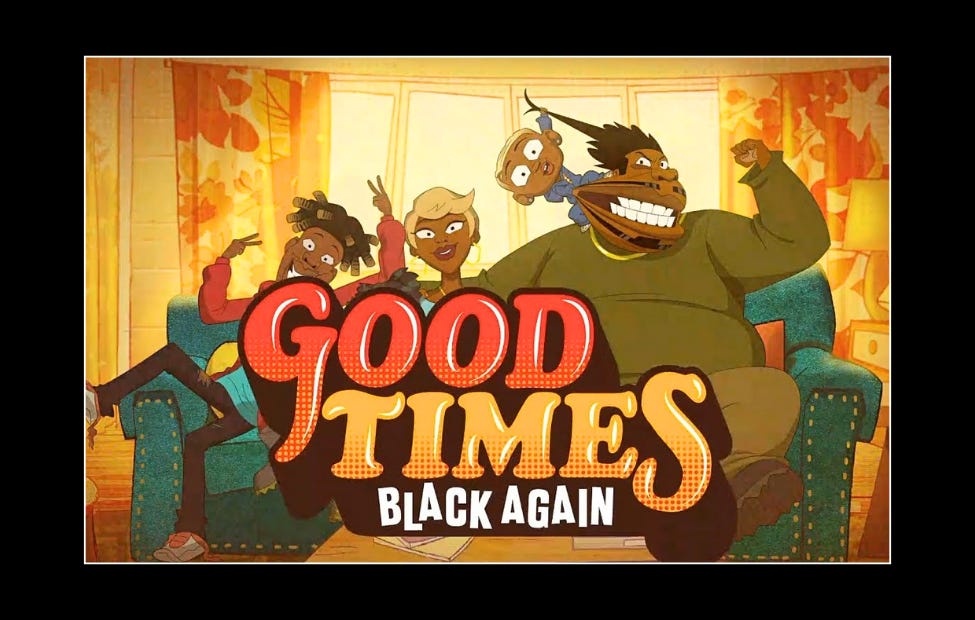
Netflix has officially canceled its animated reboot of the iconic 1970s sitcom Good Times, titled Good Times: Black Again, bringing the short-lived revival to an end after just one season. The series, which debuted earlier this year, will not be returning for additional episodes.
Produced by an ambitious team that included Seth MacFarlane, NFL star Stephen Curry, and the late television legend Norman Lear — the original creator of Good Times — the reboot aimed to update the beloved Evans family for modern times through an animated lens. The show sought to mix present-day social commentary with over-the-top, adult-oriented comedy, a tonal shift that quickly proved divisive.
While the series did briefly crack Netflix’s U.S. Top 10 list following its release, overall viewership reportedly fell short of what the streamer considers sustainable for renewal. Across its run, the show generated modest performance numbers — not catastrophic, but not strong enough to offset the lukewarm audience response and mounting controversy.
More damaging than the ratings, however, was the reception. Many longtime fans of the original Good Times felt the animated reboot strayed too far from the heart and purpose of the classic sitcom, which was known for blending humor with authentic portrayals of Black family life and systemic challenges. Instead, critics argued the reboot leaned heavily into exaggerated satire and crude comedic tropes that some believed reinforced harmful stereotypes rather than challenging them.
The backlash was swift and vocal online. Viewers took to social media expressing disappointment, and petitions circulated calling for the show’s removal from Netflix altogether. Cultural commentators also weighed in, questioning whether the new iteration respected the legacy of the original series — one of the first mainstream television shows to center a working-class Black family with emotional depth and social relevance.
The reboot experienced behind-the-scenes turbulence as well. Original developer Carl Jones exited the project during its early stages over creative differences, and showrunner Ranada Shepard stepped in to steer the series to completion. Shepard later described the final result as intentionally bold, loud, and abrasive — a genre shift that ultimately proved too polarizing for a show tied to such a revered legacy.
Even some members of the original cast expressed concern prior to the show’s launch, casting doubt on whether the animated approach could recapture what made Good Times so culturally important. Their reservations echoed the sentiments that would later dominate conversations around the reboot.
Netflix’s decision reflects the tricky balance streaming platforms face when reviving beloved franchises. Nostalgia alone no longer guarantees success; audiences increasingly expect reboots to honor the emotional and cultural tone of the originals while offering genuine creative evolution. For Good Times: Black Again, the challenge of reinventing a groundbreaking sitcom without losing its soul proved difficult to overcome.
With the cancellation, the animated Evans family chapter comes to a close — serving as a notable reminder that rebooting legacy content carries both opportunity and risk, particularly when cultural meaning is at stake.
— REAVES